From The Nook
The Thing You Always Do in October
Autumn traditions repeat quietly for years before anyone writes them down. Here's how to notice the details now, and build a book around the thing you always do.
Originally published by Our Little Book
There's a certain Saturday in October when your family does the thing you always do. Maybe it's the drive to the orchard with the crooked sign. Maybe it's the walk where everyone has to find the biggest leaf, and the rule about the biggest leaf has never once been written down.
Nobody plans a tradition. You just do something twice, and then a kid says "are we doing the thing?" and that's it, it's a thing now. Autumn is full of these, probably because the season itself repeats so loudly. The same trees go the same colors. The same soup pot comes down from the same shelf.
A tradition is a story that already has a shape
Most family moments are one-offs. The time the dog got into the birthday cake. The afternoon your youngest fell asleep standing up against the couch. Those are wonderful, and they make good pages, but you have to build the frame around them from scratch.
A tradition arrives with the frame already built. There's a beginning, which is usually getting in the car or pulling on boots. There's a middle, where the thing itself happens. There's an end, which is almost always somebody tired and carrying something. That's a story shape. You didn't have to invent it, your family invented it years ago by accident.
This is why traditions make such steady material for a book. You're not trying to remember one specific afternoon in perfect detail. You're describing the version of the afternoon that happens every year, which means you can borrow the best bits from all of them. The good hot chocolate from the year it rained. The specific way your middle kid holds the bag. It's all true, it just wasn't all true on the same day.
The orchard, and why it's always that orchard
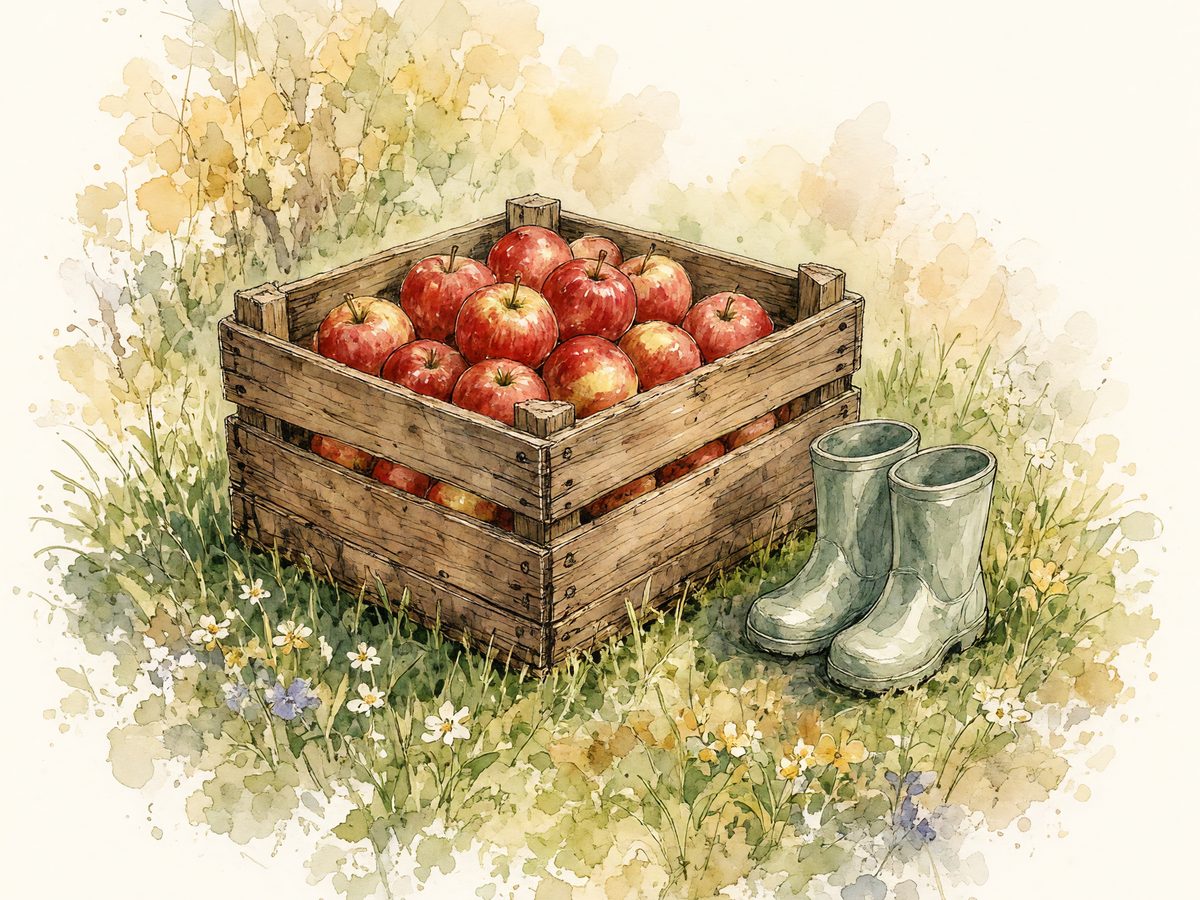
Ask a family why they go to the same orchard and you'll get a shrug and a practical answer. It's close. The parking's easy. They have the donuts. But the real answer is usually underneath: you went once when someone was small, and it worked, and going back became a way of saying that year happened.
The specifics are what make it yours. There's a gate that sticks. There's a wagon with one wheel that pulls left. There's the row you always start in because someone decided years ago it has the best apples, and no one has ever tested this claim. There's the picture you take in the same spot, where you can line them all up and watch a kid grow a head taller between frames.
When you're gathering material for a book, those details are the whole job. Not "we go apple picking" but "we go to the one with the sticky gate, and Dad always says the same thing about the ladder." A book built from the second version sounds like your family. A book built from the first could belong to anyone.
What to write down before it blurs together
The strange thing about repeating something is that the repetitions blend. You'll remember that you always go, and lose the details of any particular going. So it helps to jot a few things down while this year is still fresh, whether or not you ever turn them into anything.
Keep it small and concrete. You're not writing a diary entry, you're collecting parts. A handful of these is more than enough to build a story around, and most of them take ten seconds to capture on your phone in the car on the way home.
- ❖The thing someone always says. The warning about the mud, the joke about the same tree, the question asked every single year on the same stretch of road.
- ❖The order of operations. Boots first, then the wagon, then the long walk past the part nobody likes. Kids remember sequence better than scenery.
- ❖What everyone carries. One kid insists on the heavy bag. One refuses to carry anything. One carries a single apple with enormous seriousness.
- ❖The food. Not just what it is but who makes it, and the pot, and the smell that arrives before the soup does.
- ❖The complaint. Every real tradition has one. The cold hands, the long drive, the sibling who walks too fast. Put it in; it's what makes it believable.
- ❖What changed this year. Someone wore a bigger coat. Someone walked the whole way. That's the part you'll want back later.
If you're making something from these, a set of notes like this is most of what you need. You can hand it over and let us write and illustrate the whole thing, or use it as your own working outline and shape each page yourself. Either way, the notes are the raw material, and they're better collected now than reconstructed in March.
The leaf walk, the soup, the small ones that count
Not every tradition involves a drive. Some of the best ones are a fifteen-minute loop around the block where the rule is that everyone has to pick up one leaf and no more, and then the leaves go on the windowsill until somebody quietly throws them out in November.
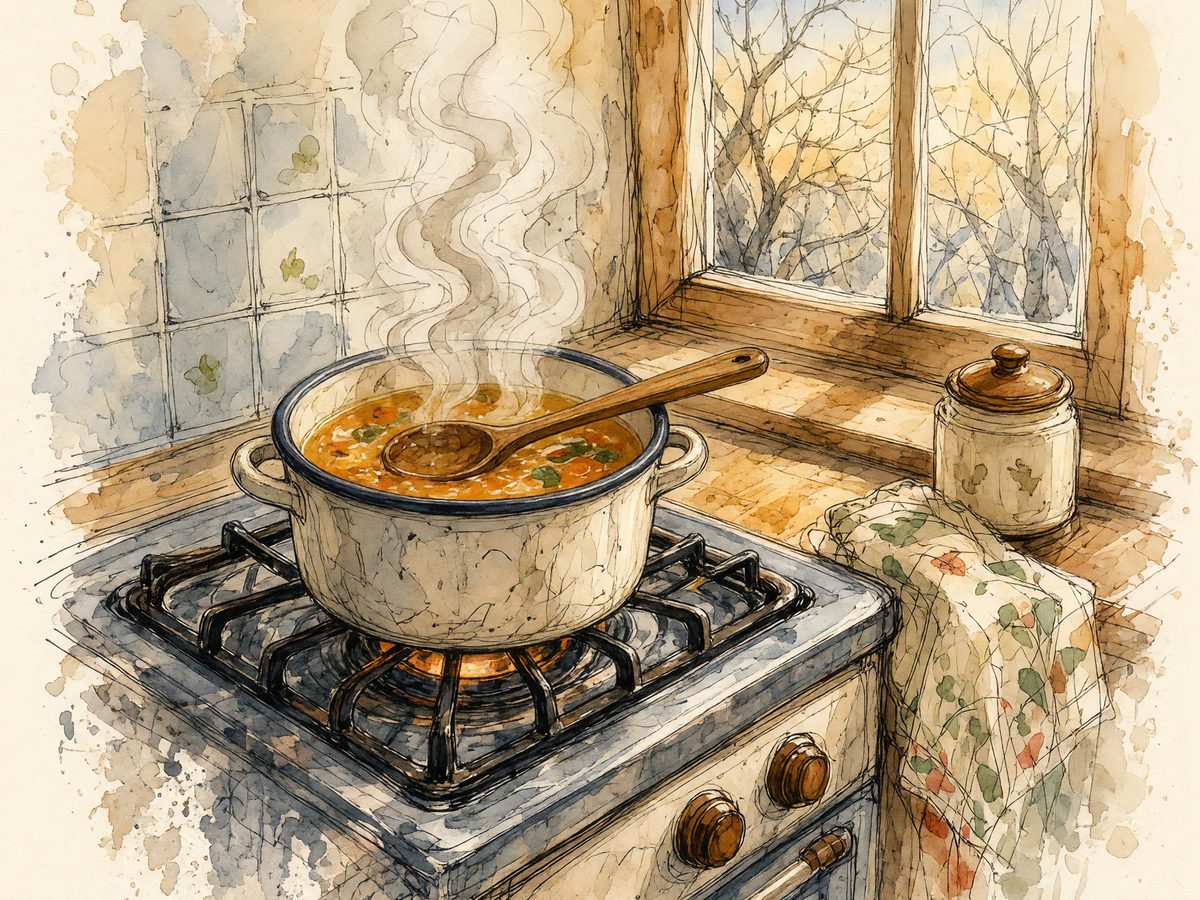
Soup counts too. The first cold evening, the particular pot, the fact that your kid only eats the bread but sits at the table anyway while it's on the stove. The walk to school in a coat for the first time. The box that comes down from the closet. The night the heat clicks on and everyone says something about it.
These small repeats often feel too ordinary to be worth writing down, which is exactly backwards. Big traditions tend to look like everyone else's big traditions. It's the fifteen-minute leaf loop that's specifically yours, with your particular sidewalk and your particular kid who insists on the crunchiest possible route home.
The ordinary things are the ones you'd have to explain to a stranger, which means they're the ones worth keeping.
Building a book that repeats on purpose
A tradition book can hold its shape nicely as a set of short stories. One story for the getting ready. One for the drive, or the walk. One for the middle part where the thing happens. One for the tired end, the carrying, the falling asleep in the car with sticky hands.
Or you can let the repetition itself be the point. The same walk, three years running: the first year someone had to be carried the whole way, the second year they walked half, the third year they got ahead of everyone. Same route, same trees, different kid. That's a real story and it doesn't need anything added to it.
Whichever way you go, the cast is small and you already know it. The kids, the grown-ups who always come, the grandparent who meets you there, the dog who has opinions about the wagon. You'll build those characters and approve how everyone looks before any of the stories get illustrated, which matters more than you'd expect with a book like this. The whole thing rests on it looking like your actual family in your actual coats.
Make it this year, while it's happening
There's an argument for waiting: let a few more years pile up, get more material, make it better. But traditions are strange that way. The year you finally write it down is the year it stops being invisible, and the writing down is part of what keeps it going. A kid who has read a book about the orchard walk is a kid who will ask about the orchard walk next September.
It's also a season that arrives with its own deadline. If the walk happens in October, then October is when you have the good details, and it's also roughly when people start thinking about what to give at the end of the year. A book about a tradition sits comfortably in that spot: it's a gift for grandparents who were in it, and for the kid who lived it, and it doesn't require anyone to have a birthday.
So take your phone out at the orchard this year, or on the block, or standing over the pot. Take one picture of the thing you'd never usually photograph: the sticky gate, the wagon wheel, the specific bowl. Write down the sentence someone always says. That's the start, and the rest of it is just deciding how much of the making you want to do yourself.
Your family already has the story. You've been telling it every fall for years without noticing. All that's left is to put it somewhere it can stay.