From The Nook
The One They Hand You at Bedtime, Again
Every child has a bedtime book they ask for again and again. Here's why favorites stick, and how a book about their own people might join them.
Originally published by Our Little Book
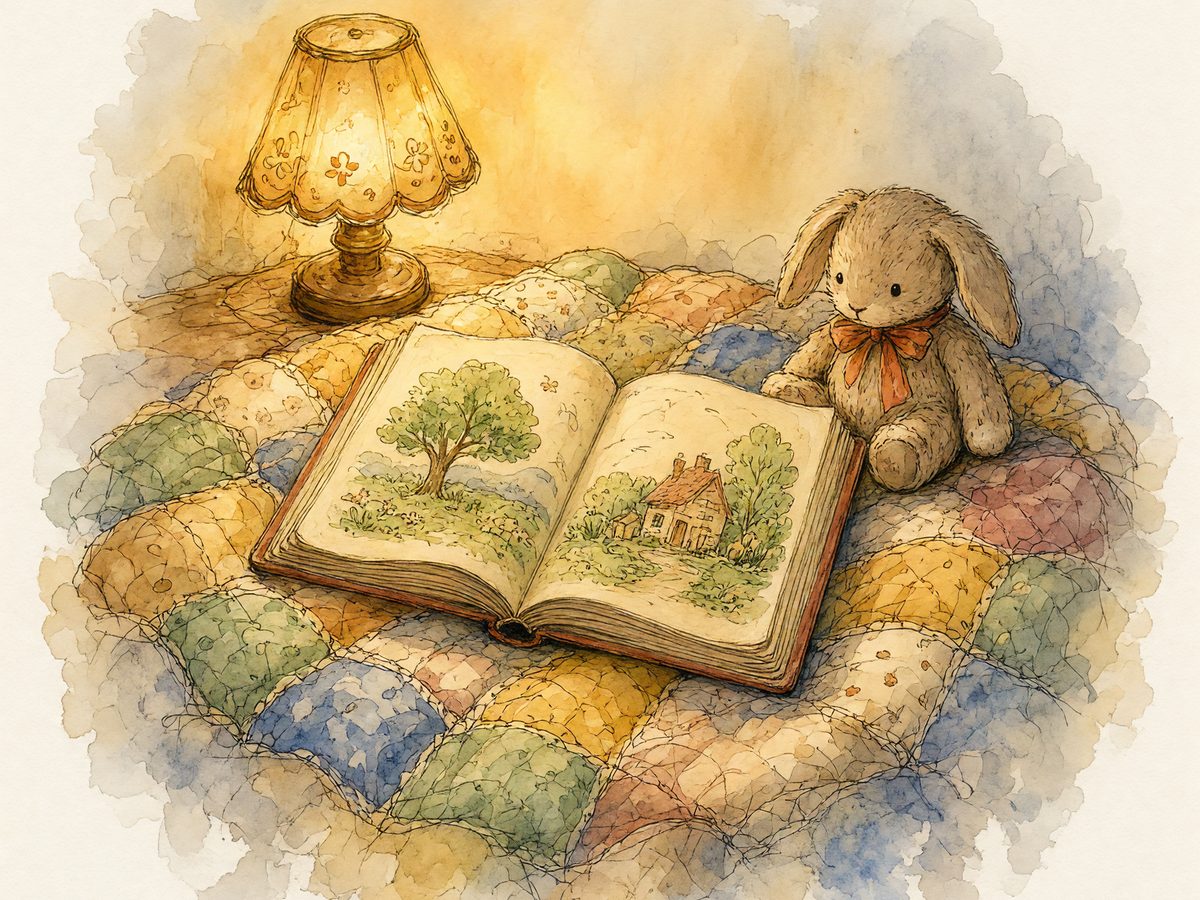
There's a book on your child's nightstand with a soft, crumpled corner and a spine that falls open to the same page. You could probably recite it with the light off. Some nights, you have.
Every family has a few of these. They aren't always the prettiest books on the shelf, or the ones you'd have chosen. They're the ones that get handed to you at bedtime, again, with a look that says this one, please. This post is about that small, stubborn rotation, and what it might be like for a book with your own people in it to find a place there.
Why the same story, again
If you've ever offered a new book at bedtime and watched it get quietly set aside, you know the pull of the familiar. The new one might be lovely. It doesn't matter. At the end of a long day, a lot of children seem to want the story they already know, the one where nothing surprises them except in the ways they're expecting.
There's something almost ceremonial about it. They wait for the page where the dog falls in the puddle. They mouth the line before you read it. They correct you, firmly, if you skip a word or try a different voice for the grandmother. The story isn't really news anymore. It's more like a room they like to walk through before the lights go out.
You don't have to understand exactly why a particular book earns its place. Sometimes it's the pictures. Sometimes it's one funny word. Sometimes it's just that it was the book in the bag on a trip, or the one you read the night the power went out. The reasons are theirs, and they're allowed to stay a little mysterious.
What the favorites tend to have in common
Look along the shelf at the books that get worn out first, and you might notice a few things they share. Not a formula, exactly. More like a family resemblance.
- ❖They're short enough to finish before eyelids get heavy, with a clear ending that feels like a door closing gently.
- ❖They have a moment children can wait for: a sound to make, a page to point at, a line to say together.
- ❖The pictures hold small things to find, like a cat behind the curtain or a sock on the stairs.
- ❖Someone in the story feels a little like someone they know, whether it's a bossy older sister or a grandpa who hums.
- ❖They sound good out loud, so you don't mind reading them for the fortieth time.
That fourth point is the interesting one. Children are wonderful at spotting themselves and their people in stories that weren't written about them at all. The bear who won't share is clearly their cousin. The rabbit with the scarf is obviously Nana. They do the casting on their own.
It's also why favorites are so personal. The book your eldest wore to pieces might mean nothing to the youngest. Each child builds their own small library of nights, and it's rarely the one you'd have predicted.
When the people in the book are their people
Now picture a story where they don't have to do the casting, because the characters already are who they are. Their grandpa, with his real glasses and his real cardigan. The family dog, ears and all. Their big brother, the baby, the neighbor who waves from the porch every morning. And them, right in the middle.
A book like that tends to get a particular kind of attention. Children point at the pictures and name everyone. They want to check that the dog is on every page. They ask you to read the part about the pancakes again, because that really happened, last Sunday, and they remember it. Most books feel familiar because they've been read so many times. This one starts out familiar, because the people in it already are.
It doesn't need to be a grand story for this to work. The best moments are often small: the walk to collect acorns, the night the cat slept on the laundry, the way Dad always says the same thing when he tucks the blanket in. If you'd like to see how small stories can fill a whole keepsake, there's a sample book you can page through.
The stories they ask for again are usually the ones that already feel like home.
Earning a place in the rotation
It's worth saying plainly: a new book doesn't always get welcomed into the bedtime pile right away, even a book about them. Some children grab it immediately. Others leave it on the shelf for a week and then suddenly won't settle without it. Both are fine. The rotation has its own rules, and it's never been in a hurry.
A few gentle things can help it feel at home. Read it on an ordinary night rather than making it an event. Let it live on the same shelf as the old favorites, not somewhere special and out of reach. Let your child turn the pages, and if they want to stop and tell you about everyone in the picture before you've read a word, let that be the reading for tonight.
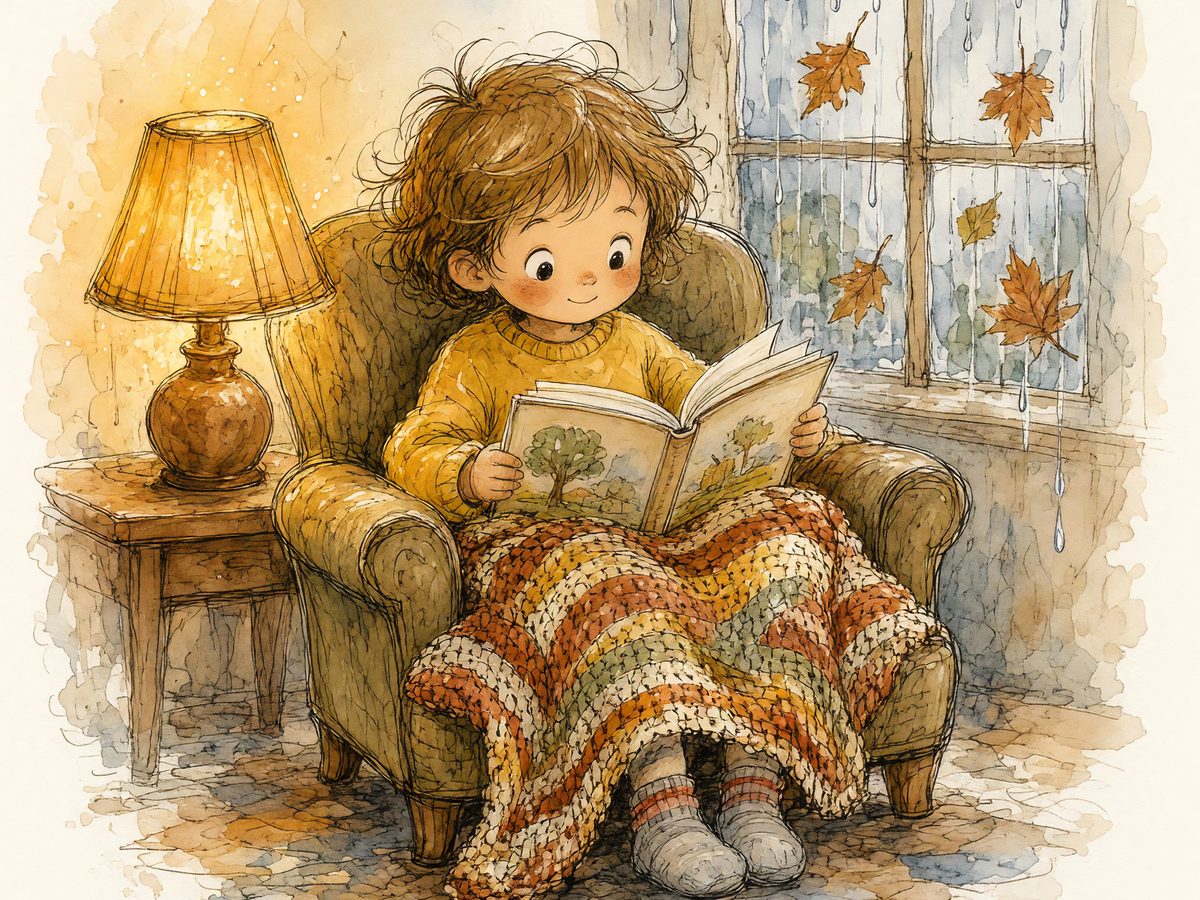
October is a nice time to try it. The evenings draw in, the lamp goes on earlier, and bedtime starts to feel cozier and a little longer. It's the season of blankets pulled up to the chin and stories read slowly, which suits a book that's meant to be read slowly. Some nights the windows rattle a little, and that's when the familiar stories seem to matter most.
Choosing moments that will last through a hundred readings
If you're thinking about making one, it can help to think the way a well-loved bedtime book thinks. What would your child happily hear forty times? Usually it's not the big milestone. It's the thing that made them laugh, or the routine that's completely theirs: the song in the bath, the trip to the bakery where they always get the same roll, the way the dog waits by the door at five o'clock.
You can make a book the easy way, where you tell us who it's for and a moment worth keeping, and we write and illustrate it for you. Or you can take the hands-on route, building each character and shaping and editing every page yourself. Either way, you'll approve the character art before anything else, and the how it works page walks through each step if you're curious.
When it's finished, it's yours to download and keep. Some families keep it on a tablet for travel nights. Others print a copy at home or take the file to a local print shop, so it can sit on the nightstand with a real spine to crack and real corners to soften. Wherever it ends up, the point is the same: it's there when they reach for it.
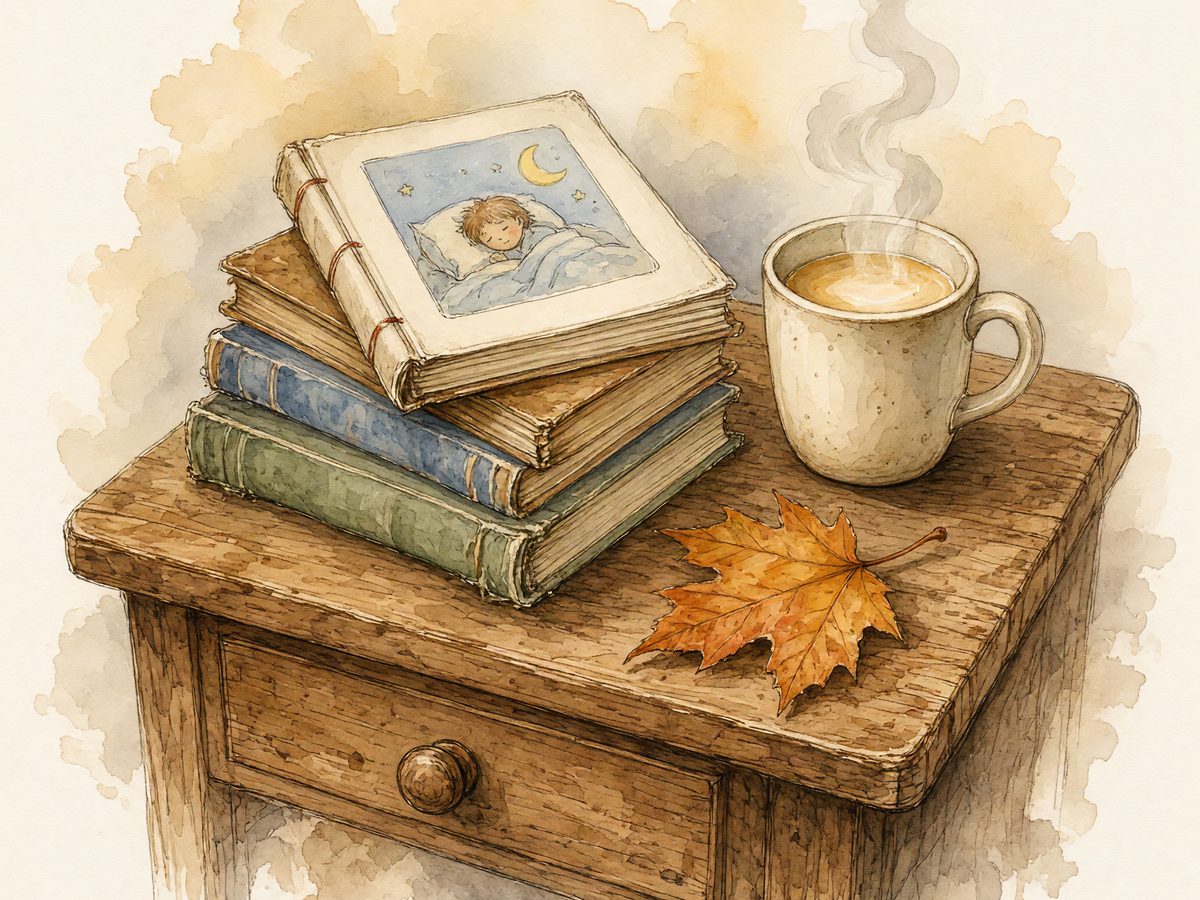
Tonight, when the familiar book gets handed to you again, take a second look at what your child loves about it. Then think about the people in your house, and the small moments from this autumn you'd like to remember. When you're ready, you can start your book whenever it suits you, and see whether it finds its way into the pile. No rush. The old favorites aren't going anywhere, and there's always room for one more.