From The Nook
The Bottom Stair, Where They End Up
The way your two children are with each other right now won't last the year. Here's how to notice it, and hold it in a book they'll both claim.
Originally published by Our Little Book
There's a sound siblings make that no one else in the house can make. It's half argument, half laughing, and it comes from behind a closed door or under a blanket fort, and you can never quite tell whether to intervene.
That sound has a shelf life. The way your two are with each other this September, one just tall enough to reach the light switch, the other still needing a boost, is not the way they'll be next September. It's worth writing down while it's still true.
The bond is made of specifics, not sentiment
If you asked most parents to describe how their children get along, you'd get something general: they're close, they fight a lot, they're best friends really. All true, and none of it is the thing. The thing is smaller and stranger than that.
It's the fact that the younger one won't eat a sandwich unless it's cut the way the older one cuts it. It's the private word they use for the neighbor's dog, a word neither of them can explain. It's how one of them always takes the left side of the back seat and no one ever decided that, it simply became law sometime around last winter.
Those details are the bond. When you sit down to hold this in a book, don't reach for the big sentiment. Reach for the sandwich. A story built on one exact, silly, observable habit will sound more like your children than any sentence about love ever could, because they'll recognize themselves in it immediately, and recognition is the whole game.
Squabbles belong in the story
There's a temptation, when you're making something to keep, to smooth it out. To leave the bickering on the cutting room floor and hand your children a version of themselves that's all hugs and shared snacks. Resist it a little.
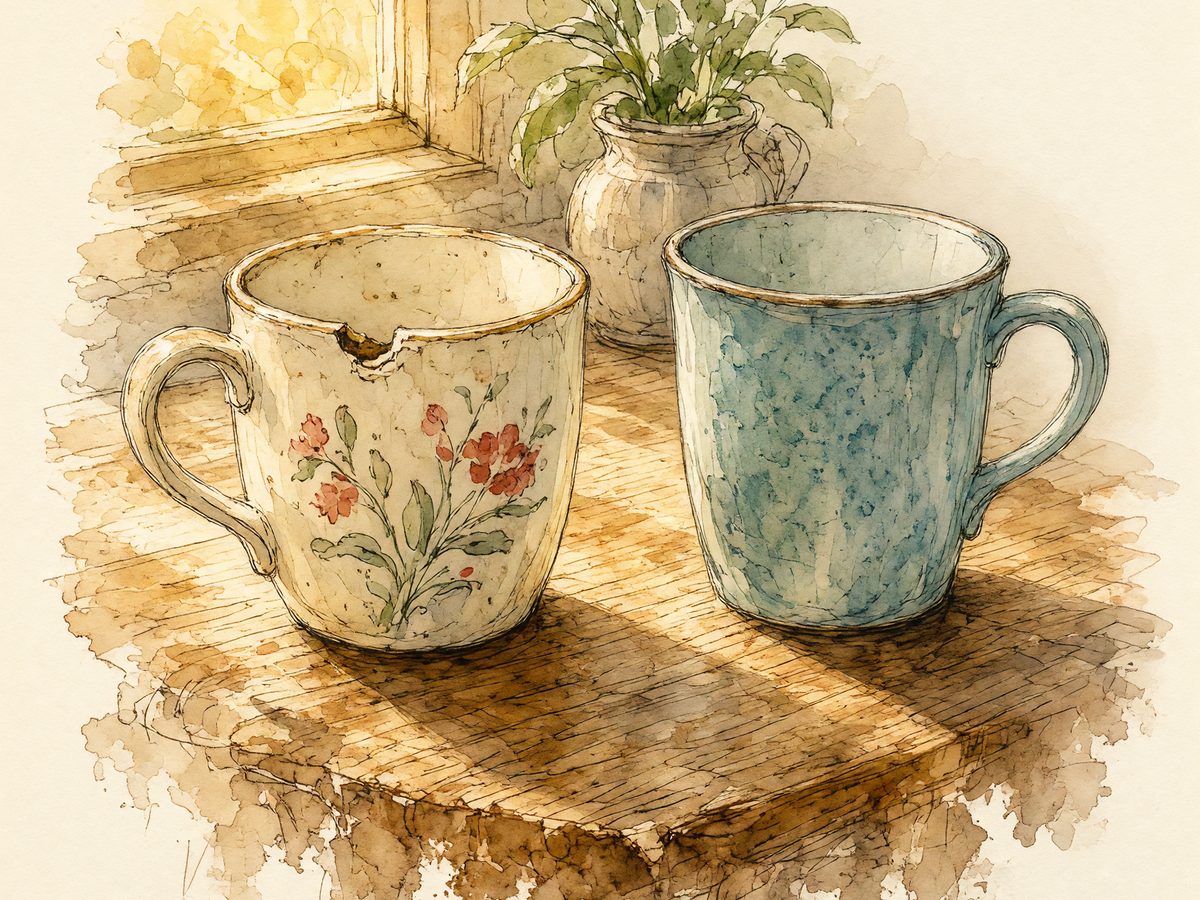
The squabbles are part of the shape. Two children negotiating who gets the good cup, who sat there first, who is technically touching whom, are doing the daily work of being siblings. Take that out and you've got two polite strangers. Leave it in, gently, and you've got them.
You don't have to make it heavy. A story can hold a disagreement over the last blue popsicle and still be warm, because the reader knows, and your children know, that the popsicle war ended twenty minutes later with both of them lying on the cool kitchen floor. That's the rhythm. Storm, then floor. Put both parts in.
The loyalty shows up sideways
You rarely see siblings be loyal to each other on purpose. It leaks out at odd angles. The older one who argues all morning and then, at the playground, quietly positions herself between her brother and the bigger kids. The younger one who insists on saving half of everything, without ceremony, without mentioning it.
Watch for the sideways moments this month. School has started back up, and the ride home is a good place to notice them: who asks the other how their day went, who defends whose teacher, who reports an injustice that happened to someone else with more outrage than they'd spend on themselves.
One of those small sideways moments is more than enough to build a story around. You don't need a plot. You need an afternoon where one of them did something quietly decent for the other and probably wouldn't admit to it. If you're not sure what a book like that looks like on the page, it helps to read through a sample and see how little a story actually needs to hold something real.
Ways to catch what's true right now
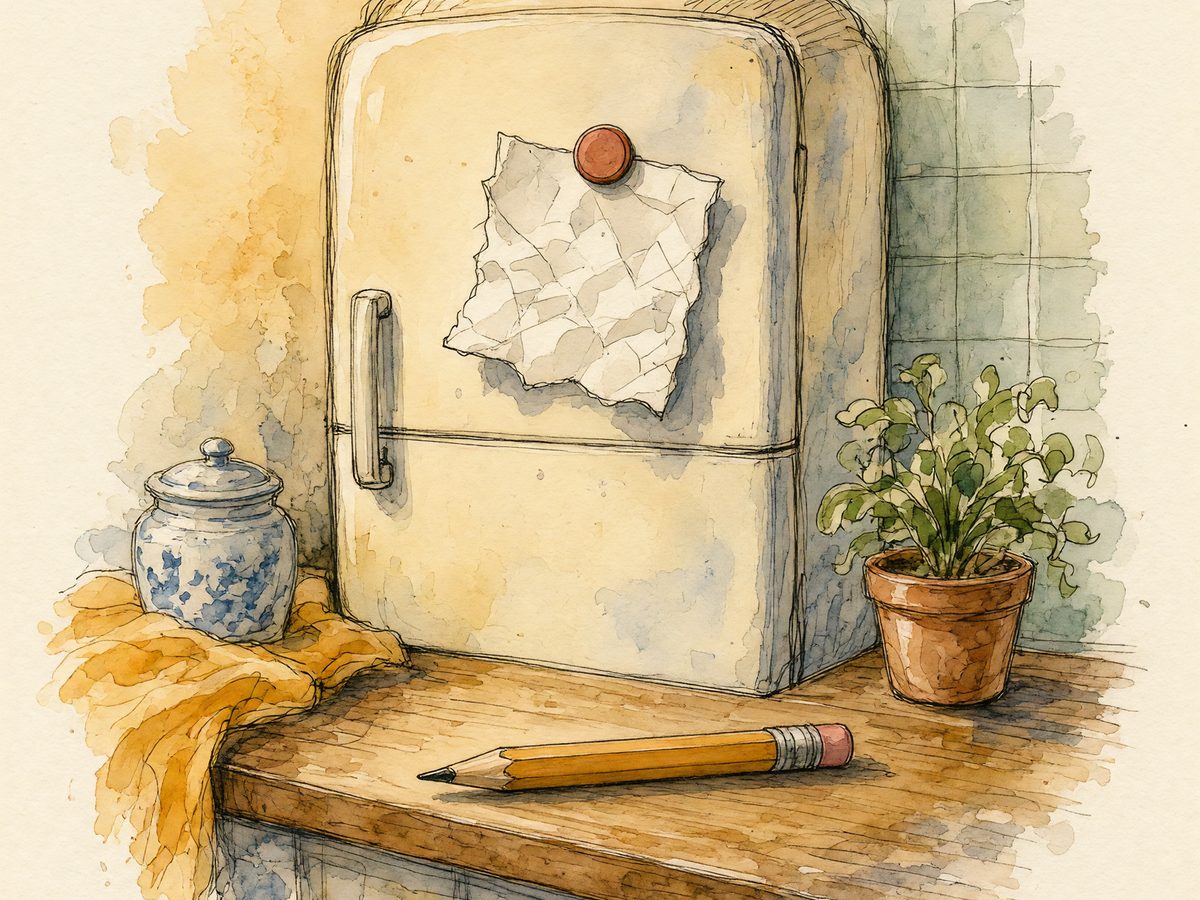
If you want to write this down but don't know where to start, start by collecting rather than composing. Give yourself a week of noticing before you try to make anything. Keep a note on your phone or a scrap on the fridge, and add to it whenever something happens that's unmistakably them.
- ❖The nickname one has for the other, especially the one that makes no sense to outsiders.
- ❖The game they invent when they're bored, including the rules they argue about most.
- ❖Who wakes up first, and what the first one does while waiting for the second.
- ❖The thing they always fight about, stated plainly and without judgment.
- ❖The thing one of them is scared of, and how the other one handles it.
- ❖A phrase one has picked up from the other, said in the same tone, with the same little pause.
- ❖Where they end up when they're getting along: a couch corner, the bottom stair, the floor under the table.
By the end of the week you'll have a page of oddities and no story yet, and that's exactly right. Those oddities are the raw material. Two or three of them, arranged into little scenes, become a book that sounds like your house and no one else's.
From there you can go either direction. You can hand the list over and tell us who it's for and one moment worth keeping, and we'll write and illustrate it for you. Or you can build it yourself, shaping the characters and every page until the popsicle war reads exactly the way it happened. Either way, you'll see and approve how your two look before anything else is drawn.
Two children, one book, and the question of fairness
Parents of two ask this almost immediately: does each child get their own book, or do they share one? There's no correct answer, only two different keepsakes.
A shared book is about the pair. Both of them are on nearly every page, and the story is about what happens between them. It tends to live on a common shelf and get read aloud by whoever's doing bedtime. It's the record of a relationship, and years later it's the one they'll both claim.
Separate books are about each child's view of the other. In hers, her brother is the small one who follows her around and copies her laugh. In his, his sister is the enormous authority who knows how everything works. Same house, same year, two completely different narrators. If you're weighing the options, the ideas for siblings page is a decent place to think it through, and how it works lays out the steps either way.
The version of each other they carry now is the one they'll be surprised by later.
September is a good month for this
Right now there's a natural marker on the calendar. New grades, new shoes, a new lunchbox routine that hasn't settled yet. Everyone in the house is slightly recalibrating, and change makes the current arrangement easier to see, the way you notice a room after you've moved one chair.
It's also the month when the gap between two children is at its most visible. One is off to a bigger building, one is still at the small door with the painted handprints. One has homework, one has a nap. They're being pulled a little apart by their schedules for the first time, and the way they find each other again at four in the afternoon is worth a page all by itself.
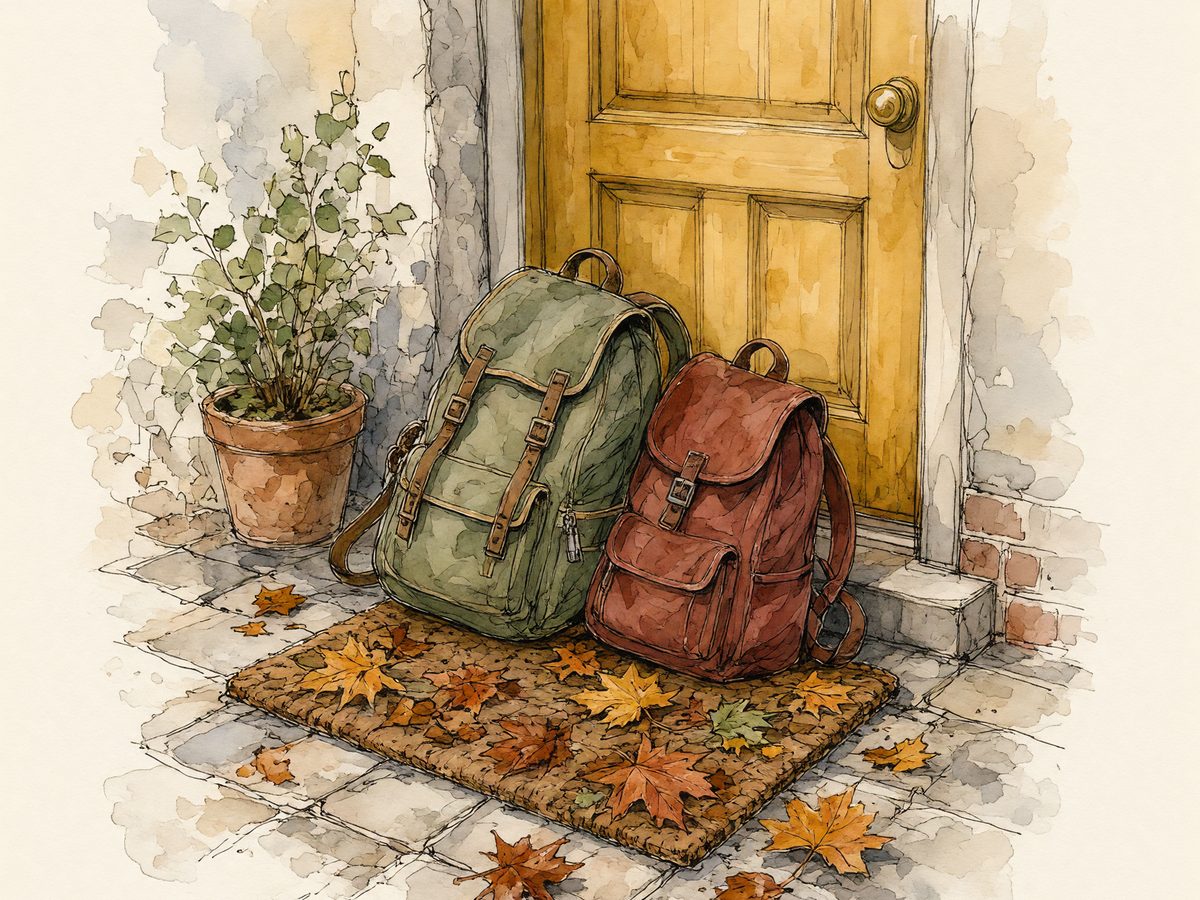
So take the walk to the bus stop as your prompt. Notice who holds whose backpack strap, who talks the whole way, who's quiet. Notice the ten seconds at the door when they say goodbye without saying goodbye. That's your first scene, and it's happening tomorrow morning whether you write it down or not.
What they'll do with it
Here's the small pleasure of a sibling book: they read it together, and they argue about it. That's not a flaw. One will insist it didn't happen that way. The other will say it absolutely did. They'll both be a little right, and they'll both want to hear it again.
And later, further out than you can picture from where you're standing, the book stops being a story about two small children and becomes a document. It says this is who you were to each other in the autumn you were six and four. The nickname is in there. The good cup is in there. The bottom stair is in there.
You can't keep the sound they make behind the closed door. You can keep the shape of it, though, in something with a cover, on a shelf they both reach for.
Start with one afternoon you remember clearly. If it makes you smile a little as you think of it, that's the one. The rest is just deciding how you'd like to make it.