From The Nook
Room by Room: Why a Few Small Stories Hold Someone Best
A single story has to choose, but a handful of short ones can wander through a person like rooms in a well-loved house.
Originally published by Our Little Book
There's a moment, usually late in the year, when you notice how much of someone you'd miss if you only got to tell one story about them. Maybe it's November, the light going early, and your dad is in the garage fixing a lamp nobody asked him to fix. Maybe it's your daughter, humming the same three notes while she sorts her leaves by color.
One story would have to choose. A book of several short stories doesn't. It can wander, the way you'd wander through a house you love, opening one door and then another, finding the same person in every room, a little different each time.
A Single Tale Asks Too Much
When you try to fit a whole person into one story, the story starts to strain. It has to be funny and tender and a little adventurous, and it has to include the dog, the kitchen, the bad knee, the way she says 'well, now.' Something gets squeezed out. Usually it's the small thing you loved most.
A single tale also wants a shape. Beginning, trouble, resolution. That's lovely for a moment, a lost mitten found, a first snow, but people don't really have one plot. Nobody fits in a single plot, and nobody should have to. Your grandmother isn't a story about a garden. She's a garden, and a card table, and a phone call every Sunday at four, and a pocket that always has a peppermint in it.
So instead of asking one story to carry everything, you can let each story carry one thing well. One about the peppermints. One about Sunday at four. One about the garden in its tired November state, the last stubborn marigolds hanging on by the fence. That's the quiet relief of a book made of short pieces. Nothing has to be the whole picture, because together they become it.
Each Story Is a Room
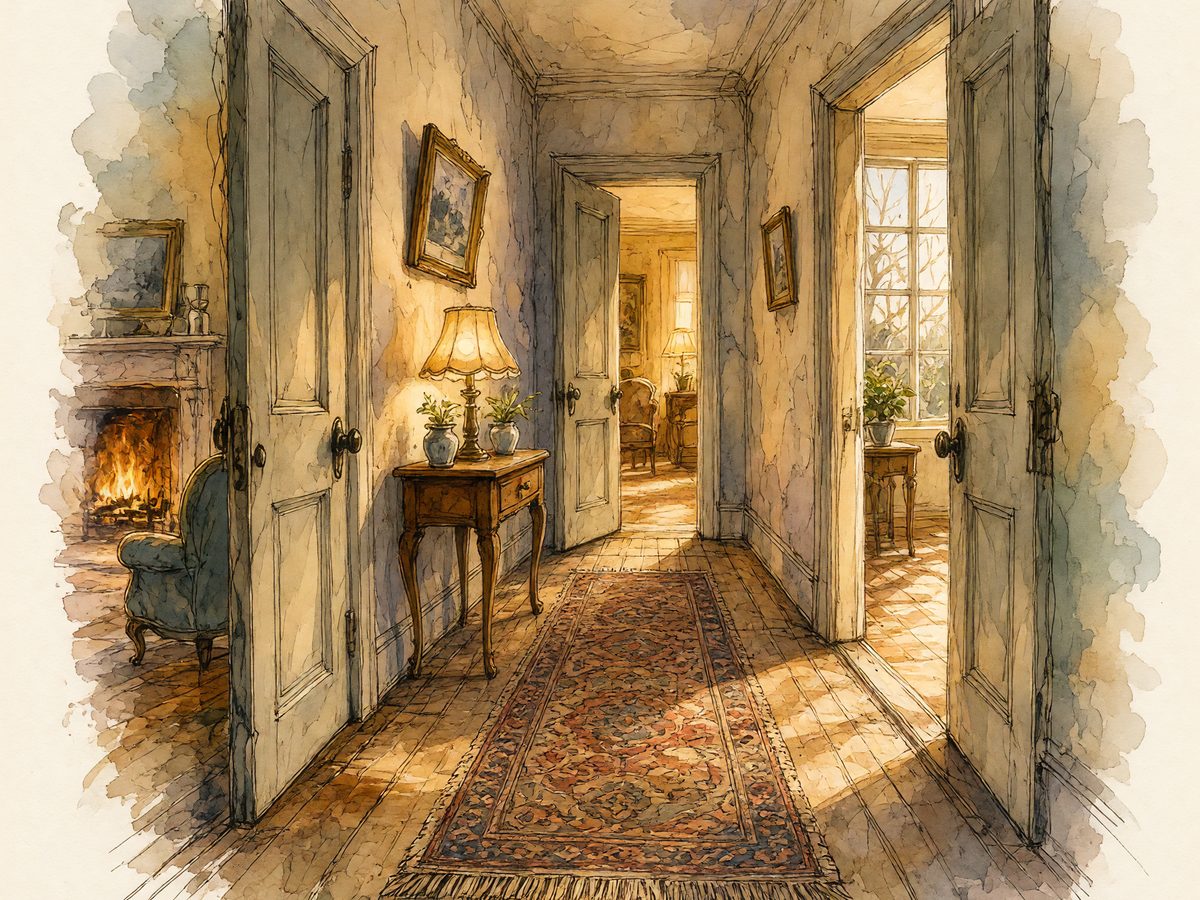
Think of the person you'd write about as a house. There's the kitchen, where they're busy and a little bossy. There's the porch, where they're slower and tell you things. There's the back bedroom, where the old photographs live, and the garage, where the projects pile up. There's the hallway, where they stop to straighten the same crooked picture every time they pass. Same person in all of them. Different light.
A short story can be one of those rooms. You don't have to explain the whole house to step into the kitchen. You just open the door: it's Saturday, there's flour on the counter, and Grandpa is pretending he doesn't know the pancakes look like a lopsided cat. The radio is on low. The window over the sink has fogged up from the kettle. That's enough. A child reading it doesn't need the rest of the house to feel at home in that kitchen.
The next story can be the porch. The one after that, the garage. A reader moves through them the way a child moves through a familiar house, knowing where everything is and still finding something new behind each door. And because each story is short, it fits an evening. One room tonight, another tomorrow, the whole house visited over a week of bedtimes.
Finding the Rooms Worth Opening
If you're not sure where to begin, start by walking through the person's week in your head. Where do they go? Where do you picture them most clearly? Think about the sounds, too: a screen door, a particular laugh, keys dropped in the same dish every evening. The rooms are usually already there; you just haven't named them yet. A few doors that tend to open easily:
- ❖The everyday ritual: the morning coffee, the walk to the mailbox, the way he always checks the weather twice.
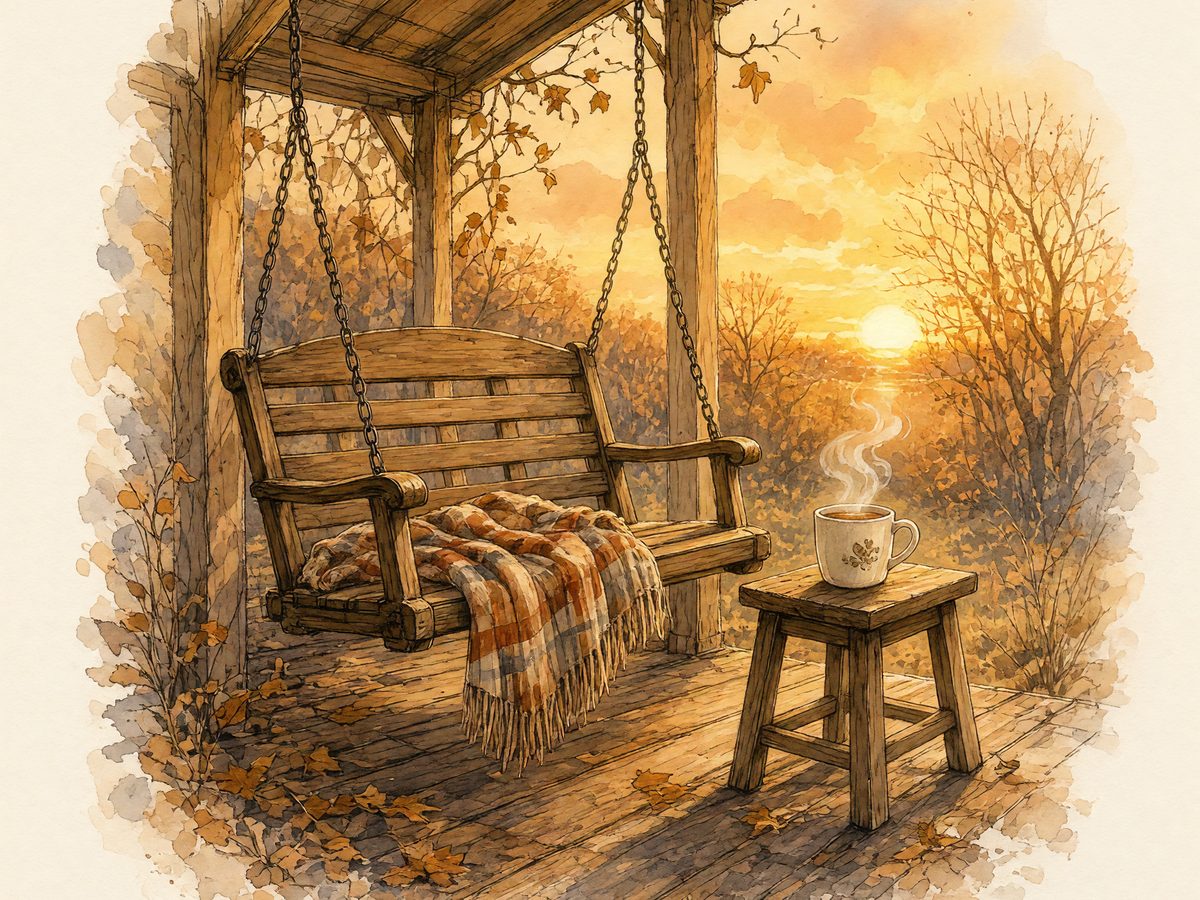
- ❖The place: the porch swing, the corner of the couch, the bench at the bus stop where you wait together.
- ❖The skill: the one thing they're quietly great at, whether it's knots, pie crust, or finding lost keys.
- ❖The sidekick: the cat who supervises, the dog who knows exactly when it's four o'clock.
- ❖The season: what they do when the first cold morning arrives, or how they get the house ready for winter.
- ❖The funny one: the joke, the mix-up, the story the family tells every single year.
You won't need all of them. Four or five rooms can feel like a whole home. Some rooms will surprise you. The story you almost skipped often turns out to be the one everyone asks for. And if you'd like to see how short stories sit side by side in a finished book, a look at a sample can help you picture the rhythm.
Small Stories Let People Be More Than One Thing
A person in a single story often becomes a type: the wise grandparent, the brave big sister, the silly uncle. That's fine for a fairy tale. It's less fine when the person is your actual sister, who is brave, yes, but also scared of moths and terrible at sharing the last cookie. Short stories give people room to contradict themselves, which is what real people do all the time.
Your brother can be the one who's too cool to hold your hand in one story and the one who carries you home from the park in the next. Your dad can be the one who burns the toast and the one who knows every bird at the feeder by name. Your mom can be serious about bedtime and completely unserious about puddles. When those stories sit in the same book, nobody has to choose which one is true. They both are.
That's often the part a family recognizes right away when they read it aloud. Not one big perfect portrait, but a handful of small, honest ones, each catching a different expression. Like a stack of photographs, where the blurry one is somehow everyone's favorite. The book doesn't decide who someone is. It just keeps the doors open.
A person isn't one story. They're a house you keep coming back to, finding the lights on in a different room.
Building the House, at Your Own Pace
There are two easy ways to start. You can tell us who the book is for and one moment worth keeping, and we'll write and illustrate the stories around it. Or you can build the characters yourself and shape each story room by room, editing every page until it sounds like your family. You can read how the whole thing works if you'd like to see both paths side by side.
Either way, you approve the character art first, so the person on the page looks like the person on your couch. And when it's finished, the book is yours to download and keep, to read on a screen, print at home, or bring to a print shop you like. Some families keep it on a tablet for car rides; others print a copy for each grandparent.
November is a good month for this kind of noticing. The days are shorter, people gather indoors, and the small habits come into focus: who lights the candles, who saves the wishbone, who falls asleep first after dinner. Write them down while they're happening, even in a few scribbled words on the back of a receipt. Each one is a room. A few of them, side by side, are a house.
So this week, maybe just walk through one person's rooms in your head. Pick the one with the warmest light. It doesn't have to be the biggest or the most important. The kitchen on a Saturday is plenty. When you're ready, you can start your book with that single door, and let the rest of the house fill in from there.