From The Nook
Four Hundred Miles and Still on the Shelf
Distance is a fact, but being forgotten isn't. How a small book can keep a faraway grandparent on the shelf, at hand, in a child's ordinary week.
Originally published by Our Little Book
Distance is strange with small children. A grandparent can love a child completely from four hundred miles away, or four thousand, and still worry about the same quiet thing: that in the middle of an ordinary week, when nobody is on a video call and no suitcase is by the door, they might slip a little out of the child's picture of the world.
It's September, so the picture is being redrawn anyway. New shoes, new classroom, new bedtime. Everything in a young child's life is getting sorted into what's here and what isn't. A book won't shrink a map. But it can put a person on the shelf, in reach, at the same height as the bear and the truck and the one about the moon.
Presence is mostly repetition
Think about who feels solid to a three-year-old. Not necessarily the people who say the most interesting things. It's the people who show up in the same shape, over and over: the neighbor with the yellow door, the crossing guard, the cat that sleeps on the same chair. Familiarity is made of repeats.
That's the part distance takes away. A visit can be wonderful and still be a single event, bracketed by airports. Calls are lovely and also weather-dependent: a bad nap, a dropped connection, a kid who would rather show you the underside of the couch than talk. None of it is anyone's fault. It's just that the rhythm is hard to keep from far away.
A book is a strange and useful object here because it repeats without asking anything of anyone. It sits on a shelf being the same. When a child pulls it down for the ninth night in a row, the grandparent in it is doing exactly what they did the first night: standing in their kitchen, wearing their real cardigan, saying the thing they actually say. Nobody had to be free at seven o'clock.
Put the real details in, not the general ones
There's a temptation, when you're making something for a faraway grandparent, to aim for the big warm generic version: the loving grandma, the funny grandpa, hugs and cookies. It's sweet, and it's also a little blurry. Children don't attach to blurry.
They attach to specifics, and the more ordinary the specific, the better it works. The screen door that sticks. The mug with the chipped handle that only he uses. The way she narrates her own cooking. The exact dog. The fact that his truck smells like sawdust and mints. These are the things a child can hold, and they're the things that make a picture on a page feel like a person rather than a type.
So when you're gathering material, don't reach for the summary. Reach for the small evidence. Ask the grandparent what they do in the first ten minutes after they wake up. Ask what's on their windowsill. Ask what they were doing the last time the child called. Those answers are usually better than anything you'd invent, and they're the sort of thing you can hand straight over when you start a book.
Let the grandparent stay in their own place
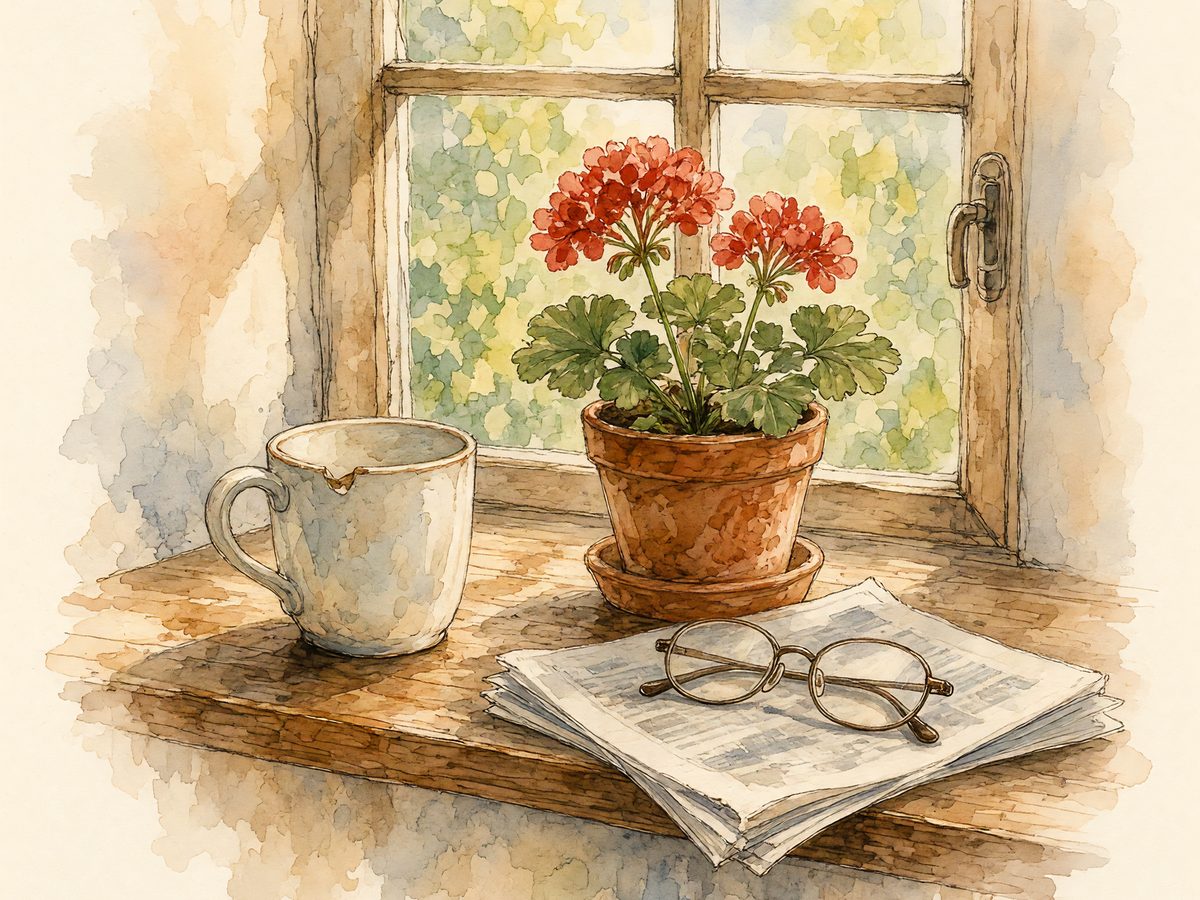
One of the quiet decisions worth making early: does the story bring the grandparent to the child, or the child to the grandparent? Both work. But there's something durable about letting them stay put, in their own house, with their own weather.
When the pages show a grandmother in her actual living room, with her lamp and her stairs and her view, the child gets a mental address for her. She isn't floating. She's somewhere. And then, when a call comes through and there's a corner of that same room behind her shoulder, the child has seen it before. That recognition is a small, good thing, and it costs nothing to build in.
It also gives the story somewhere to go. Distance is a real part of this family's life, and stories don't need to pretend otherwise. A book can hold the whole shape of it: he's over there, we're over here, and here are the ways we reach across. The reaching is the interesting part.
Small threads that carry a person across a distance
If you're stuck on what a story about a faraway grandparent could actually be about, look for the things that already travel between you. Most families have more of these than they realize.
- ❖The phone call ritual. Not the call itself, the ritual around it: who dials, what she always asks first, the thing he always says at the end.
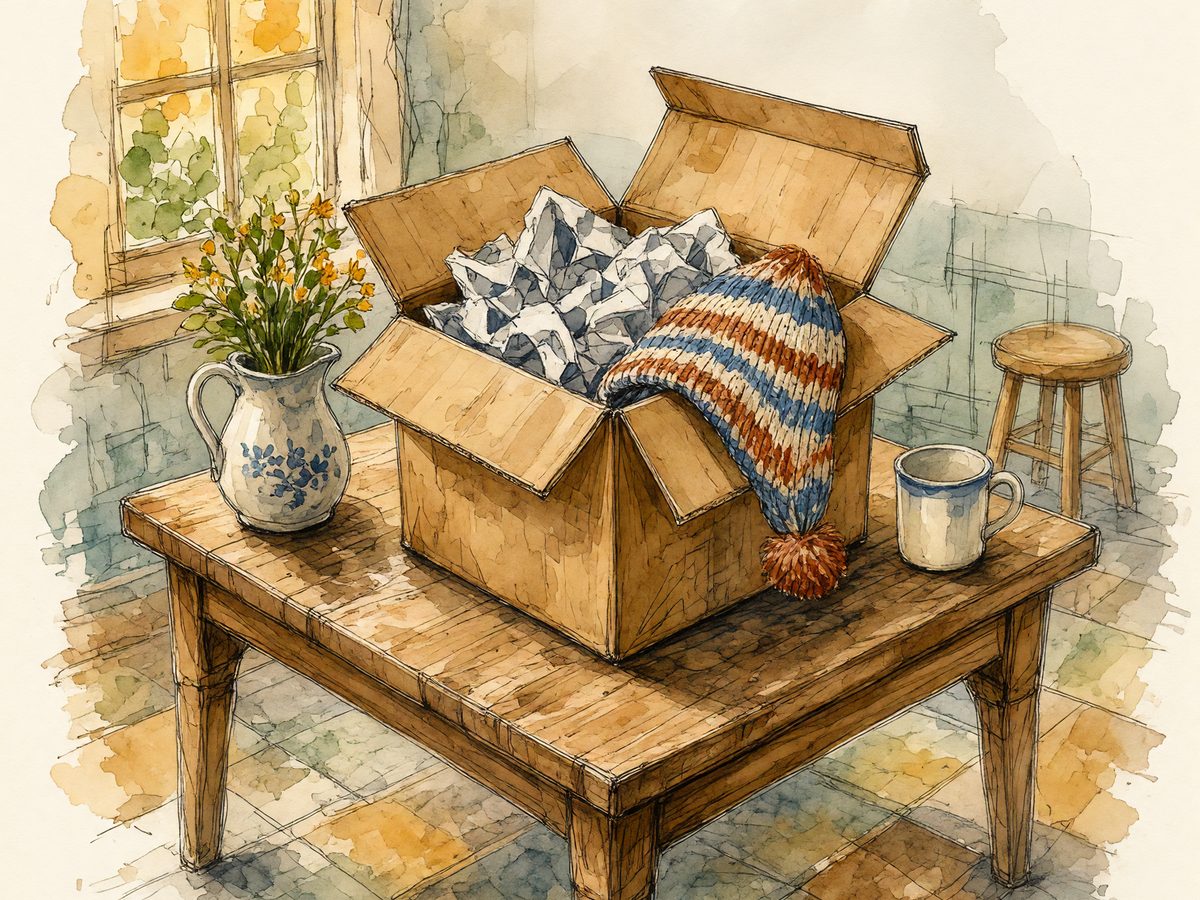
- ❖A package. The tape, the wrong-sized box, the newspaper padding, the small bad joke tucked in with the socks. A parcel is a whole plot on its own.
- ❖One shared object. Two matching spoons, two identical hats, a rock from her driveway that lives in the child's pocket. Objects hold people well.
- ❖A recipe made in two kitchens. Same soup, different stoves, one of them warmer than the other because of the season.
- ❖A weekly picture. She sends what she sees out her window. The child sends what's out theirs. Over a year, that's a lovely quiet correspondence.
- ❖The airport pickup. The waiting, the scanning of faces, the exact moment of spotting. Children remember that moment with their whole bodies.
- ❖Something only they do together. The one game, the one song, the one walk that never happens with anyone else.
Any one of those is enough for a short story. You don't need seven. You need one, told closely, with the real names in it. If you'd rather see how a handful of small stories sit together in one book before you decide, it helps to look at a sample and notice how little each page has to carry.
Who makes it matters less than who's in it
Sometimes the grandparent is the maker: they want to send something into a house they can't get to often. Sometimes it's the parent in the middle, making something so their own mother stays vivid to a kid who's only met her four times. Both directions are common, and neither is better.
If you're the grandparent, you have the advantage of memory. You know what your kitchen sounded like when your own children were small, and you probably know one story about the child's parent at that age that the child has never heard. That's a strong thing to put in a child's hands: proof that their mother was once four, and that you were there.
If you're the parent, you have the advantage of the daily view. You know which of your father's phrases your child has started repeating without knowing where it came from. You know what the child asks about him. You can gather all of that and hand it over, or you can sit with it yourself and shape each page until it sounds exactly like your family. There's an easier way and a more hands-on way to do this, and the right one is mostly a question of how much you want to be holding the pen.
Approve the face first
There's one step in this that matters more than usual when distance is involved, and it's the character art. A child who sees their grandfather every Sunday will forgive an approximate drawing. A child who sees him twice a year is building their sense of him partly from pictures, so the picture should be right.
Right doesn't mean photographic. It means the true things are there: the beard shape, the glasses, the good shirt, the way he stands with his hands in his pockets. Send the photo where he looks most like himself, not the formal one. Say what the family always teases him about, because that's usually the feature a child would draw first.
You'll see the characters and sign off on them before any story pages are made, which is the moment to be picky. It's worth being slow there. Everything after that rests on it, and what goes into a book is easier to imagine once the faces are settled and you can hear the voices.
Being far away is a fact. Being forgotten is not the same fact, and it isn't inevitable.
What it looks like a year later
Here's the part nobody plans for: the book gets worn. The corner of page four goes soft. The child starts telling the story back before the page turns, and getting one word wrong, and insisting on that wrong word forever. It becomes household language.
And the grandparent, four hundred or four thousand miles off, becomes a character the child knows the way they know the bear and the truck. Not a special occasion. A regular. Someone who's in the rotation, on the shelf, at hand on a Tuesday in September when the light goes early and nobody feels like a phone call.
That's the whole ambition, and it's a modest one. You're not fixing distance. You're just making sure the person on the other end of it stays in the room.
If someone in your family is far away this autumn, start with one small thing they do that your child could draw. That's usually the beginning. From there it's mostly gathering what you already know, and then handing it to someone who can put it on a page.