From The Nook
Biscuit, Hazel Avenue, and a Blanket Called Blue
The real name of the street, the dog, and the worn blue blanket: why the small, true specifics are what make a family story feel like yours.
Originally published by Our Little Book
Ask a child where they live and you probably won't get a zip code. You'll get something like, the yellow house by the big tree, or the street where Mr. Okafor's cat sits on the wall. Ask what their dog is called and you'll get the name, said with total confidence, as if everybody knows.
That's the quiet magic of specifics. A story about a dog is pleasant. A story about Pickles, who steals socks and sleeps on the third stair, is yours. This October, while the leaves are doing their thing on Juniper Lane or wherever your own street happens to be, here are a few thoughts on why the real names matter so much, and how to gather them.
The Name You Call Out the Back Door
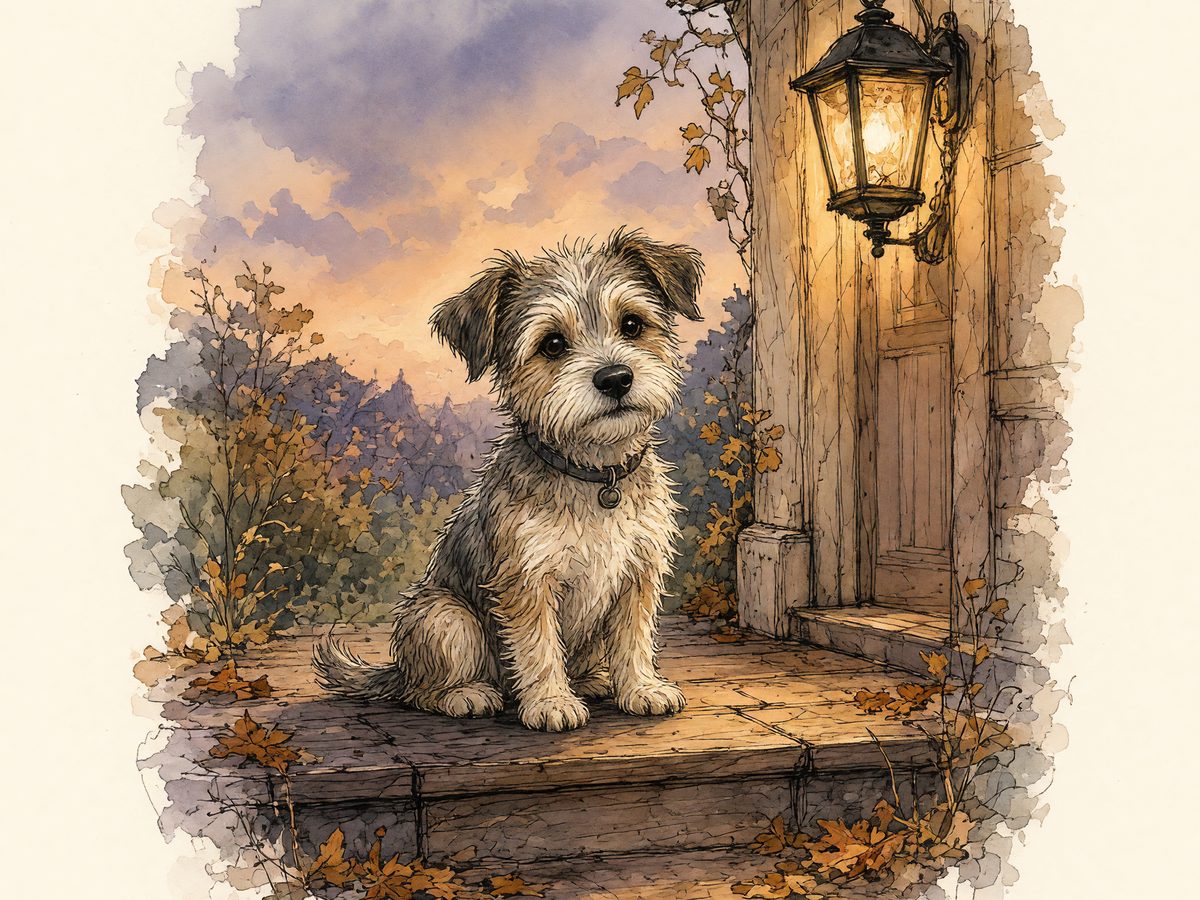
Every pet has an official name and a real one. The official name went on the vet form. The real one is what you shout across the yard at dusk when the porch light comes on and somebody needs to come inside. Maybe it's Biscuit. Maybe it's Biscuit, but mostly Biscy, or Mister B, or a string of syllables that only makes sense in your kitchen.
In a family story, that second name is the one worth using. When a child hears it read aloud, they're not hearing about a dog. They're hearing about their dog, the one with the gray chin and the habit of leaning against legs. The name carries all of it, the way a pocket carries a handful of acorns without anyone having to list them.
The same goes for the people. Grandpa might be Pop, or Bampy, or Grandpa Lou. An aunt might only ever be called by a nickname she got at age six and never escaped. Write down the version your child actually says, not the polite one. That's the person they'll recognize on the page.
The world is full of dogs. There is only one Biscuit.
Your Street Is a Character Too
Stories need a place to happen, and you already have one. It might be Hazel Avenue, or the cul-de-sac with the basketball hoop, or the third floor of a building with an elevator that hums. Whatever it is, it has a name, and it has details only your family would think to mention.
Think about the walk you take most often. There's the crack in the sidewalk shaped like a lightning bolt. The house with the inflatable pumpkin that goes up every October. The mailbox someone painted to look like a fish. These aren't background. They're landmarks, and children keep a careful map of them in their heads.
When a book names the real street and drops in one or two of those landmarks, something clicks. The story stops being set somewhere and starts being set here. A child can point out the window and say, that's where it happened. Few things in a story feel as satisfying as that.
Don't worry about whether the street name sounds storybook enough. Elm Street doesn't need to be Whispering Willow Lane. The plain, real name is the one your child has heard a hundred times on the walk home from school, and that familiarity is exactly the point.
The Blanket With a Name of Its Own
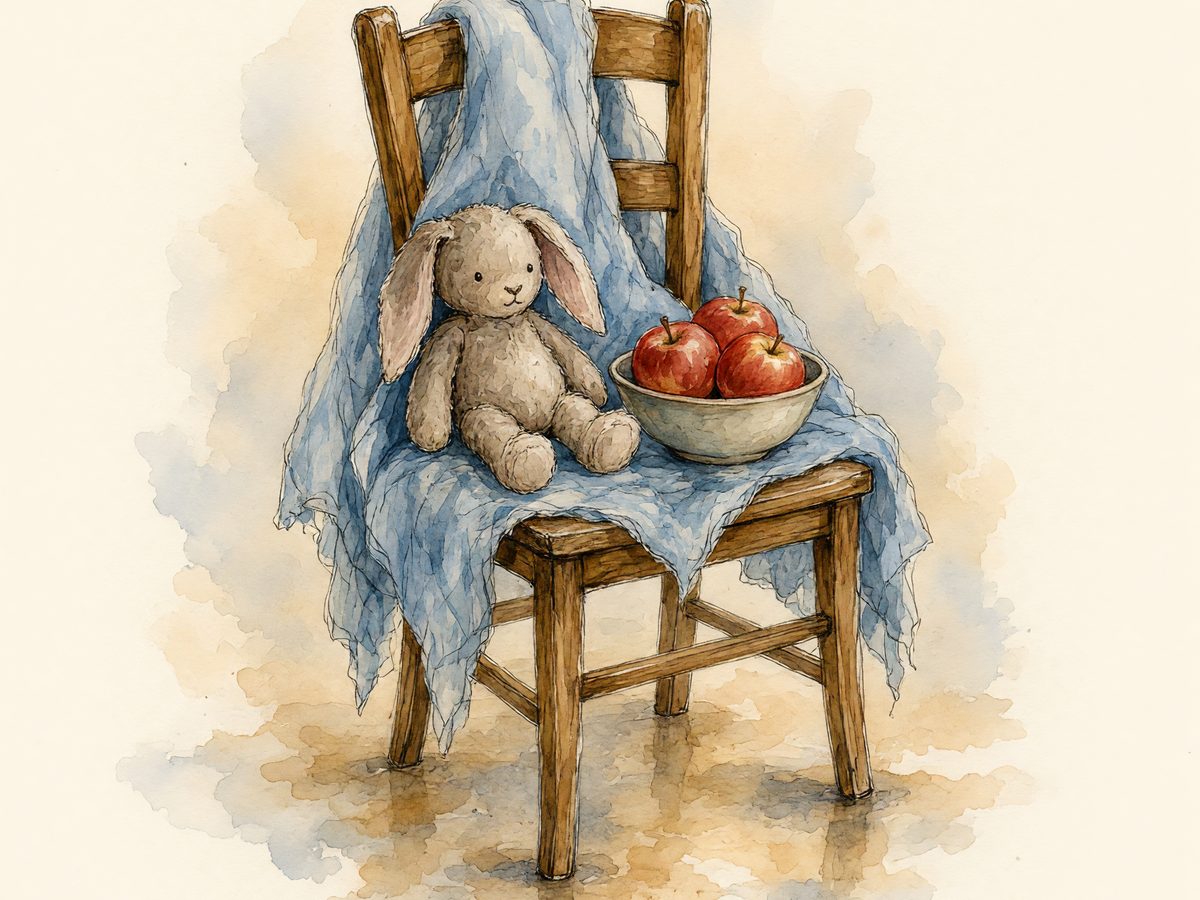
Most families have at least one object that has quietly become a member of the household. A blanket worn soft at the corners, called Blue even though it's mostly gray now. A stuffed rabbit named Carrot. A car the whole family calls the Bean, because it's small and green and nobody remembers who started it.
These things rarely get mentioned in ordinary stories, but they're everywhere in a child's day. The blanket comes to breakfast. Carrot has to be buckled in. The Bean gets a pat on the hood after a long drive. Putting them in a book by name is a way of saying the things they care about are worth writing down.
There's a gentle comedy in it too. Picture an illustrated page where Blue the blanket is draped over a chair like a cape, or Carrot is sitting at the head of the table wearing a paper crown. The detail is small, but it's the one they'll go looking for every time the page turns.
If you're not sure which objects count, watch what gets carried from room to room. Watch what has to come along in the car, what gets searched for at bedtime, what has a spot on the pillow nobody else is allowed to take. Those are the ones worth naming in a story, if they don't have a name already.
The Words Only Your Family Uses
Then there's the private dictionary every household builds without meaning to. The word your toddler invented for spaghetti that everyone still uses. The name for the scratchy armchair. The thing you call the last cookie in the jar. Outsiders would need a glossary. Your child needs nothing at all.
These words are some of the best material you have, and they're also the easiest to forget, because they feel so ordinary from the inside. It helps to keep a little list going for a week or two. Leave it on the fridge and add to it whenever someone says something that makes you smile. A few places to look:
- ❖Pets, with every nickname they've collected over the years
- ❖The street, the building, and the corner shop or park you pass most
- ❖Comfort objects: blankets, stuffed animals, a favorite cup with a chip in the rim
- ❖Family words, like the made-up name for breakfast on Saturdays
- ❖What your child calls each grandparent, aunt, uncle, and neighbor
- ❖Rooms and spots with names, like the reading nook or the cold step
October tends to add a few entries of its own. The jack-o'-lantern that gets a name every year. The cardigan someone wears so often it's become a joke. The particular leaf pile the kids rebuild every afternoon. Seasonal words like these make lovely details, because they fix a story to a time as well as a place.
You won't use every item on the list in a single book, and you shouldn't try. But having them written down means the right one is there when a story needs it.
Putting the Real Names on the Page
Once you've gathered your names, there are two easy ways to get them into a book. If you'd like us to do the writing, you can simply tell us who the book is for and a moment worth keeping, and include the names that matter: the dog, the street, the blanket. We'll weave them into the stories and the illustrations for you. You can read more about how it works whenever you like.
If you'd rather shape it yourself, the hands-on creator way lets you build each character, write every story, and adjust every page until Pickles is exactly as scruffy as he should be and Hazel Avenue looks the way it does in October. Either way, you approve the character art first, so the people and pets look right before anything else happens.
If you're curious what a finished book feels like, a sample book shows how small details sit inside short illustrated stories. Once you finalize your own, it's yours to download and keep, read on a screen, print at home, or take to a print shop of your choosing.
So this week, listen a little more closely. Notice what your child calls the crooked tree at the end of the road, or the sound the radiator makes, or the dog when he's being silly. Write it down. Those names are already a story. When you're ready, you can start a book and give them a page of their own.